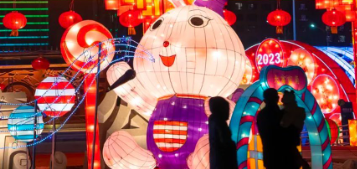
Lunar New Year isn’t just what happens in the Middle Kingdom
This past Sunday, millions of Asian families all over the world celebrated Lunar New Year, one of the most important holidays for many East and Southeast Asian communities. Lunar New Year festivities often include large family gatherings, games, and feasts of traditional food. Although colloquially known as “Chinese New Year”, Lunar New Year celebrations and traditions vary depending on the culture one is from: in Vietnam, children may receive li xi, small red envelopes filled with money, from family and friends; similarly, Korean children learn elaborate bows, called “sebae”, to perform in front of their older family members in exchange for extra cash. But why exactly do many Asian communities celebrate Lunar New Year in late January and early February rather than on January 1st? And where, exactly, did these customs originate from?
Customarily, Lunar New Year is celebrated in a 15-day interval, beginning on the first new moon on the lunar calendar and ending on the first full moon; the dates typically range from January 21st to February 20th on the Gregorian calendar. While many East and Southeast Asian countries celebrate the new year based on the Chinese lunar calendar, Mongolia and other Turkic regions celebrate their new year (Tsagaan Sar) based on the Mongolian lunar calendar, meaning that the Tsagaan Sar falls on a different day than the majority of Asian new years. The usage of the terminology of “Chinese New Year” to describe all Asian Lunar New Years simplistically generalizes all Asian traditions to only the dominant majority. “Chinese New Year” is non-inclusive , and we should take care to distinguish names when referring to any group’s Lunar New Year customs.
While it’s no doubt that China’s customs and culture had a sweeping influence on many parts of Asia, each country that celebrates Lunar New Year does it in a unique and beautiful way. The streets of Hanoi during Tèt, filled with colorful lanterns, kumquat and peach blossom trees, vibrant with Vietnamese culture; the warm Mongolian homes on Tsagaan Sar lit with candles and the laughter of family as they prepare for spring; and the multitude of other Asian customs deserve to be appreciated just as much as the widely-appreciated Chinese culture.
Leave a Reply