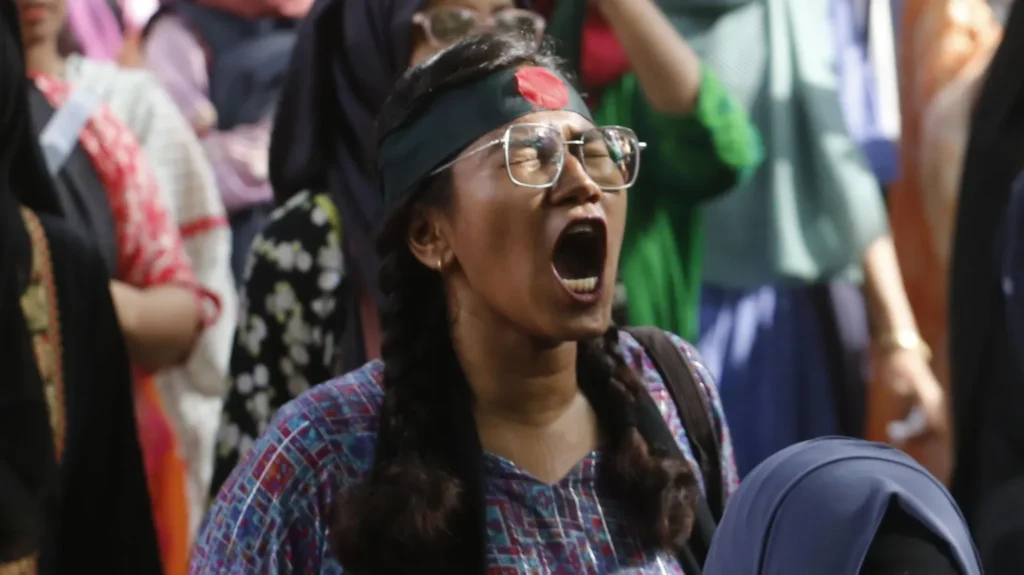
In recent weeks, Bangladesh has been gripped by widespread protests led by university students against a government recruitment system that they claim is unfair and discriminatory. The system, which allocates a significant portion of high-paying government jobs based on various quotas, has sparked outrage among students who argue that it undermines meritocracy.
The controversy centers around a policy that reserves a third of government job positions for specific groups, including children of war heroes from Bangladesh’s independence struggle in 1971, women, ethnic minorities, and the disabled. Critics of the system allege that it disproportionately benefits individuals connected to pro-government factions aligned with Prime Minister Sheikh Hasina, whose family has played a pivotal role in Bangladesh’s political landscape since its inception.
The protests, dubbed the “Bangla Blockade,” have seen thousands of students taking to the streets in major cities like Dhaka, disrupting traffic and even halting train services in their demands for reform. The demonstrations reached a tipping point when Bangladesh’s highest court temporarily suspended the controversial recruitment system, although protests persist until the system is permanently abolished.
“We will not return to classrooms until our demand is met,” declared Rasel Ahmed, a prominent leader among the protesting students, emphasizing their steadfast determination to achieve meaningful change.
For many students, the issue transcends mere opposition to quotas; it reflects a broader struggle for fairness and transparency in accessing coveted government jobs. These positions are highly prized due to their competitive salaries and stability in a country where economic opportunities are fiercely contested.
The government’s response has been met with defiance from the protesting students, despite Prime Minister Sheikh Hasina’s dismissal of their actions as futile. She defended the quota system as a means to ensure inclusivity and representation for historically marginalized groups in Bangladesh’s evolving socio-political landscape.
Bangladesh, once known as one of the world’s poorest nations, has made remarkable economic strides in recent years, with substantial advancements in poverty reduction and economic growth. However, the pandemic-induced economic downturn has exacerbated social tensions, leading to heightened scrutiny over government policies, such as the controversial quota system.
As the protests continue to reverberate across Bangladesh, students remain resolute in their demand for quota reform, signaling a pivotal moment in the nation’s ongoing struggle for social justice and equitable opportunities in public service.
The outcome of these protests holds significant implications not only for the future of government recruitment policies but also for the broader aspirations of Bangladesh’s youth to shape a fairer and more inclusive society.
Leave a Reply