Source: Creatrip
Here’s how to get away with assault.
In July of 2021, 4 South Korean middle school students physically and sexually assaulted a fellow middle school girl with various objects for almost 2 hours. Her crime? Answering a phone call. A circulating picture of the 13-year old victim’s bloodied body caused immense public outrage; however, due to South Korea’s Juvenile Protection Act exempting children aged 10 to 14 from criminal punishment, the four perpetrators were released with minimal sentencing.
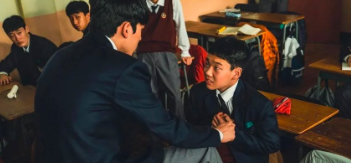
The issue of bullying has always been prevalent in Korean society. According to the Ministry of Education, Science, and Technology, approximately 1 in 10 primary and secondary school students report having been a victim of school bullying. With the exception of the installation of more security cameras around schools — which are often low-resolution — the South Korean government has failed to take initiative to address the issue. Often escaping their misdeeds with no more than a mandated apology letter, perpetrators of school violence are able attend prestigious universities and live their lives as they please. This injustice is especially conspicuous within the politically powerful, as can be seen with the recent controversy around Chung Sun Sin, the chief of the National Office of Investigation and a powerful prosecutor. When Chung’s son’s history of verbal bullying came to light, the family utilized the political position of Chung Sun Sin to drag the case on for a full year. The Chung family dragged what was a simple school bullying case all the way to the Supreme Court of Korea to delay consequences until Chung’s son, the perpetrator of vicious verbal harassment, was accepted into the exalted Seoul National University. The victim of the harassment reportedly suffered immense psychological trauma, even dropping out of high school after years of being at the top of his class.
Although Chung Sun Sin was eventually pressured to resign from his position, the scandal has brought into question the power of status and wealth in what claims to be a merit-based democracy. As one SNU student put it, “People with money and power just go from strength to strength even when they’re guilty of misdeeds, while the have-nots are the victims, yet they’re the ones whose future avenues get closed off. If that isn’t an unfair, unequal society, what is?”
Leave a Reply